
This Once Human base building guide explains everything you need to know about building, upgrading, and defending your base efficiently in the game.
Base building in Once Human is not a side activity it is the foundation of your entire survival strategy. Your base is your crafting hub, your storage system, your defensive stronghold, and your respawn anchor all at once. Build it well and every other system in the game becomes easier. Build it poorly and you will spend more time recovering from raids and contamination damage than actually progressing. This complete guide covers how base building works, how the territory system operates, the best locations to settle, how to build effective defenses, how to upgrade your base over time, and the best beginner layout to get you started on the right foot.
You can visit the official Once Human website for more details about the game.
How Once Human base building guide works: core mechanics explained
In this Once Human base building guide, understanding how the construction system works is essential for building an efficient base.
For optimized farming routes and resource zones, see our Once Human map guide.
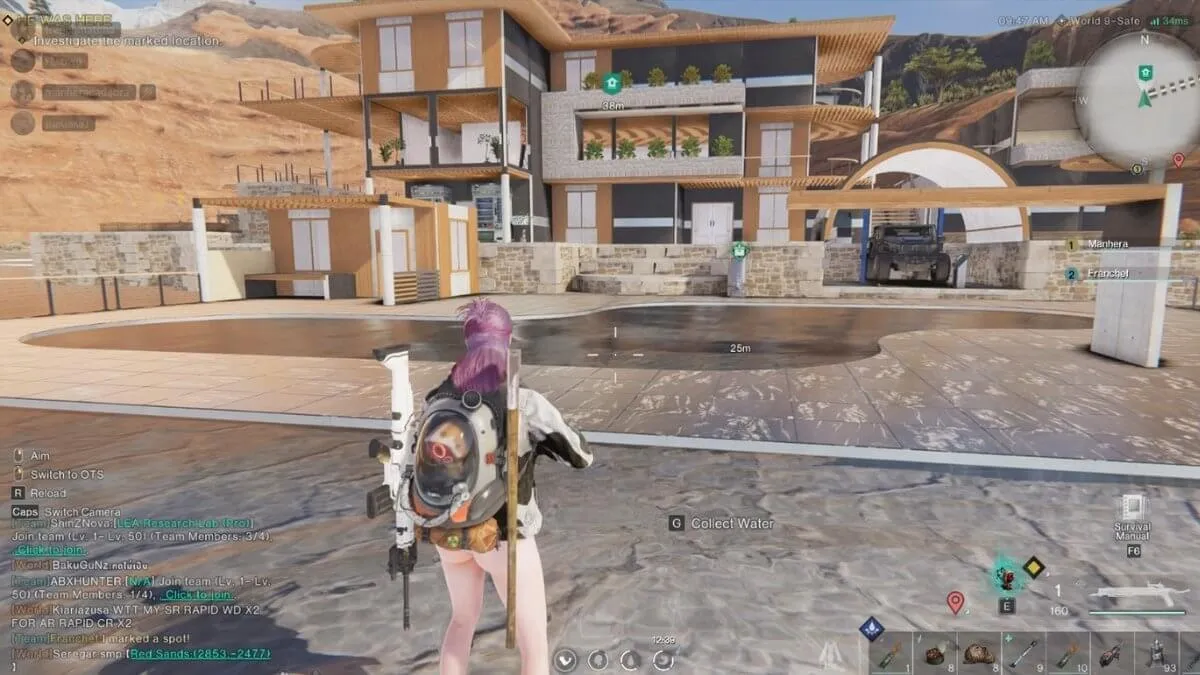
Base building in Once Human operates through a construction grid system anchored to your Territory Stake, the item you place to claim your land and activate your personal building zone. Everything you build walls, roofs, crafting stations, storage, defensive structures must fall within the radius of your Territory Stake or it will not register as part of your base.
The construction grid and blueprint system
Building uses a snap-to-grid mechanic that makes placement clean and consistent. You select a structure blueprint from your construction menu, choose a placement location within your territory radius, and confirm. Most structures require specific crafting materials wood and stone dominate early construction, while metal alloys and advanced components become necessary for mid-to-late game upgrades.
Blueprints are unlocked through the Memetics tech tree, which means your base capabilities are directly tied to your research progression. Prioritizing base-related Memetics nodes early accelerates how quickly you can transition from a basic shelter to a fortified compound.
Structural integrity and contamination damage
Every structure in Once Human has a durability rating. Contamination events, enemy raids, and PvP attacks all deal durability damage to your buildings. If a wall’s durability drops to zero, it collapses and anything behind it becomes exposed. Managing repairs is an ongoing responsibility, not a one-time task. Upgrading your structures to higher material tiers is the most effective long-term solution, as advanced materials have significantly higher base durability and resistance ratings.
Once Human territory system explained: the base ownership mechanic every player must understand
The territory system is what separates Once Human base building from purely cosmetic construction games. Your territory is a living resource that requires active management.
How territory staking works
When you place your Territory Stake, you claim a fixed-radius zone as your personal base area.
to get the most out of your setup, it’s worth checking our Once Human complete beginner guide to better understand progression systems.
This zone appears on the map and is visible to other players, which makes your location a strategic decision rather than just a convenience choice. In PvP-enabled servers, your territory can be contested, and defending it becomes a daily priority during active seasons.
Each player can only maintain one active Territory Stake at a time. Relocating your base requires dismantling your current stake, recovering your materials, and restaking in a new location a significant investment of time and resources that reinforces the importance of choosing your starting location carefully.
Territory maintenance and decay
Territories that are left unattended for extended periods will begin to decay. Inactive bases lose durability passively over time, and in high-activity servers, abandoned territories become targets for resource scavenging. Logging in regularly, maintaining your structures, and keeping your crafting stations stocked are all part of keeping your territory functional and defensible.
Shared territories in co-op play
In multiplayer and clan-based play, territories can be shared between trusted players. Shared territory access allows squad members to use each other’s crafting stations, access shared storage, and contribute to base defense making coordinated team bases significantly more powerful than solo compounds in the late game.
Best Once Human base locations: the top spots every survivor should claim first
In this Once Human base building guide, choosing the right base location is one of the most important decisions for long-term survival.

Once human, a world map showing the best locations to build your base.
Location is the single most impactful base building decision you will make. The wrong location costs you resources, time, and in PvP servers, your entire progress. This Once Human base building guide helps you choose the best location based on resources, safety, and progression.
What makes a base location good
The ideal base location balances four factors: proximity to resource nodes, defensibility of the terrain, distance from high-traffic player routes in PvP servers, and contamination level of the surrounding zone. A base sitting directly on top of a wood and stone deposit is efficient. A base placed in a natural chokepoint is defensible. A base tucked into low-traffic terrain survives longer in competitive servers.
Top early-game base locations
The Chalk Peak Foothills offer the best combination of resource access and terrain defensibility for new players. The area has abundant wood and stone deposits within short gathering range, the terrain elevation provides natural sightlines for defensive structures, and contamination levels are low enough that your base will not take passive damage during normal play sessions.
The Riverside Clearing in the central map region is an excellent alternative for players prioritizing crafting efficiency over defense. The flat terrain makes construction faster and more material-efficient, and the proximity to water-based resource nodes essential for mid-game crafting recipes cuts down on travel time significantly.
Best mid-to-late game base locations
Blackstone Quarry Perimeter becomes the premier base location once you have the gear and upgrades to handle the higher contamination levels in that zone. The proximity to Elite Aberrant spawn points and rare mineral deposits makes it the most resource-efficient location in the mid game for players investing heavily in crafting progression.
The Fractured Peaks Ridge is the endgame location of choice for players who prioritize both resources and Season 3 content access. It sits adjacent to the highest-density Aberrant Den spawns introduced in Aberrant Progeny, meaning your base becomes a staging point for the most valuable farming routes in the current season.
Once Human defensive structures guide: how to build a base that survives everything
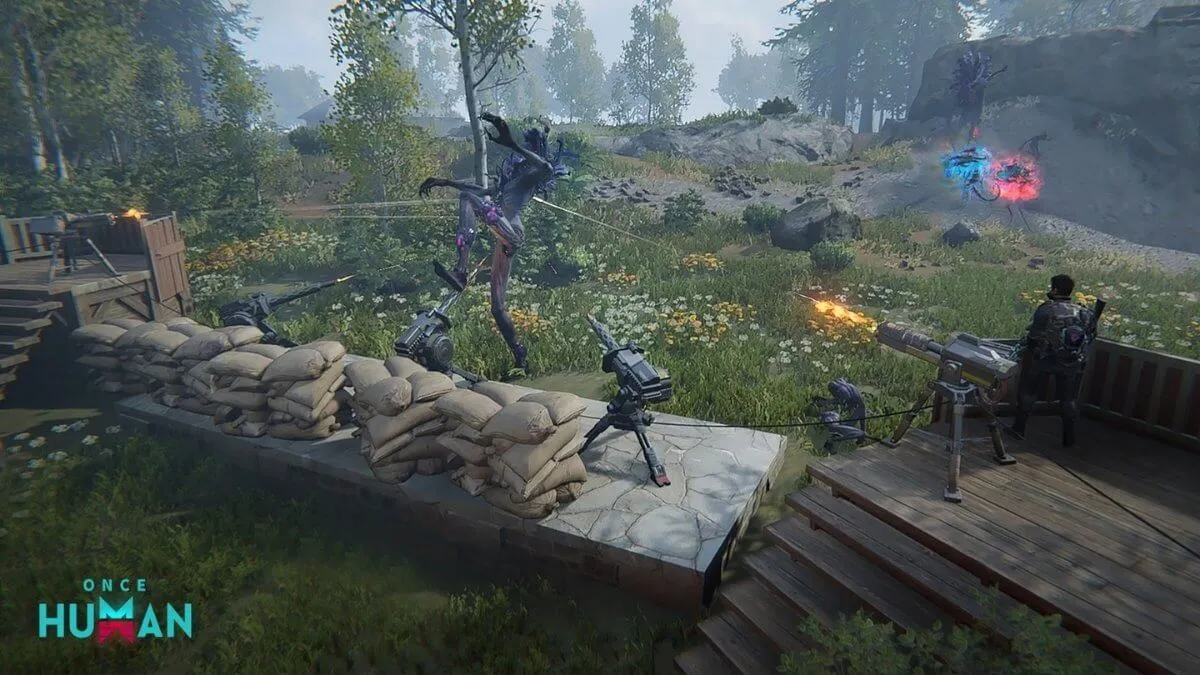
A base that cannot be defended is just a gift to other players and enemy Aberrants. The defensive structure system in Once Human is layered, rewarding players who think architecturally about threat management. Following this Once Human base building guide will help you build a strong defense system against raids and enemies.
Understanding enemies is crucial, so check our Once Human aberrants guide to learn how to handle different threats.
Walls, gates, and perimeter design
The foundation of any defensive base is a solid perimeter. Stone walls are the minimum acceptable standard for a perimeter in mid-game content wood walls will not hold up against Elite Aberrant raids or organized PvP attacks. Metal alloy walls are the endgame standard, offering the highest durability rating available and the strongest resistance to explosive and elemental damage types.
Gates must be placed strategically. Every gate is a vulnerability point, so minimizing the number of entry points in your perimeter design reduces your defensive surface area. A single reinforced gate with a layered approach a secondary inner wall behind the gate creating a kill corridor is far more effective than multiple entry points protected by individual defenses.
Turrets and automated defenses
Turrets are unlocked through the Memetics tech tree and represent the most important defensive investment you can make in Once Human. Basic Arrow Turrets provide early-game automated defense against standard Aberrants and opportunistic raiders. Firearm Turrets are the mid-game upgrade that handles Elite Aberrant attacks and deters most PvP threats.
Turret placement follows a coverage logic: position them at elevation when possible, overlap their firing arcs to eliminate dead zones, and prioritize covering your gate and any resource storage structures. A turret that cannot see its target is useless clear your perimeter of obstructions regularly.
Traps and environmental defenses
Beyond turrets, spike traps, proximity mines, and slow-field devices provide passive layers of defense that punish enemies who breach your perimeter. These are especially effective in PvP contexts where the element of surprise is critical. Layering a slow-field trap behind your gate, followed by spike traps in the approach corridor, significantly reduces the combat effectiveness of any raider who breaks through your outer wall.
Once Human base upgrades: the progression system that makes your base Unstoppable
This Once Human base building guide explains how upgrading your base improves durability and efficiency over time. Building a base is not a one-time project. The upgrade system ensures your base evolves alongside your character progression.
material tier upgrades
Every structure you build can be upgraded from its initial material tier to a higher one as you unlock advanced blueprints and gather the necessary materials. The upgrade path runs from Wood → Stone → Metal Alloy → Reinforced Compound for most structural components. Each tier upgrade increases durability, resistance ratings, and in some cases unlocks cosmetic options.
Upgrading your most vulnerable structures first gates, outer walls, turret foundations prioritizes your defensive capability before aesthetics. Many experienced players operate partially upgraded bases for extended periods, focusing material resources on critical structures before completing interior upgrades.
Crafting station upgrades and base efficiency
Your crafting stations the Workbench, the Furnace, the Weapons Bench all have upgrade tiers that unlock new recipe categories and reduce crafting time. A fully upgraded crafting suite turns your base into a production powerhouse, eliminating the need to travel to world crafting points and giving you a significant time efficiency advantage over players running basic setups.
Power systems and advanced base features
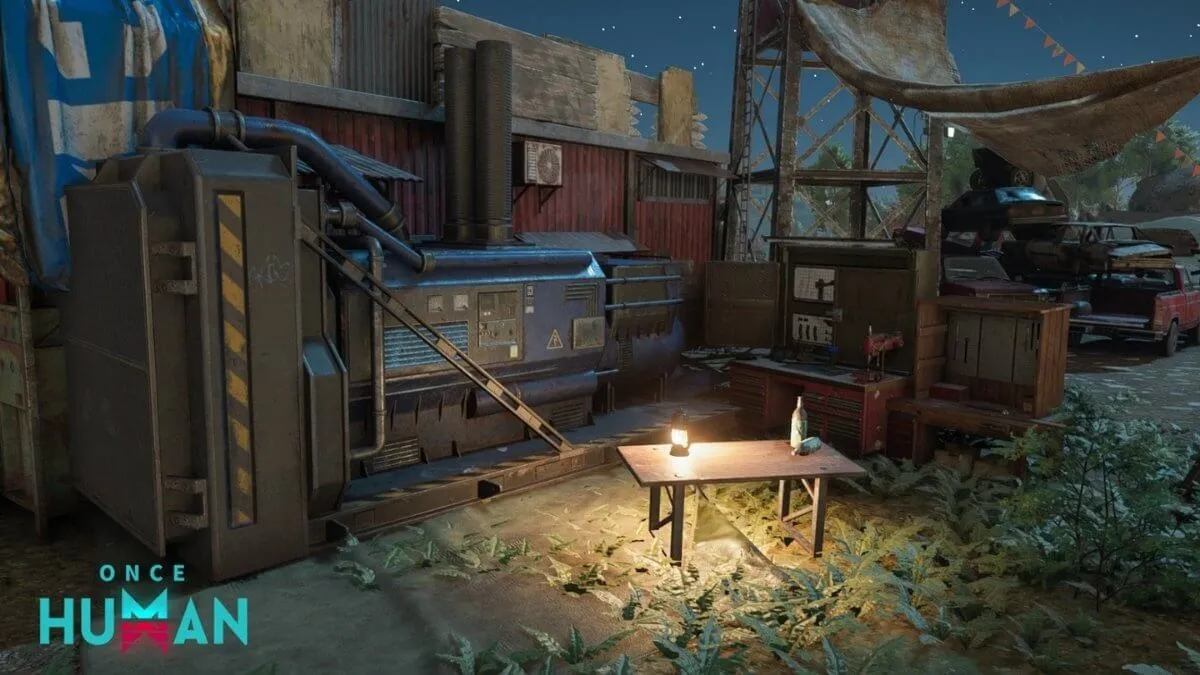
Power systems and generators are essential for advanced base upgrades in Once Human.
Mid-to-late game base upgrades introduce a power grid system that unlocks electrically-powered structures: advanced turrets, lighting systems, upgraded crafting stations, and environmental control features that reduce contamination damage inside your base. Building and maintaining a reliable power supply becomes a core base management task from the mid game onward.
Once Human Base Building Guide 2026: Best Base Setup for Beginners
If you are new to Once Human base building, starting with a proven layout eliminates costly mistakes and lets you focus on learning the game’s other systems.
The recommended starter footprint
Begin with a compact square footprint four outer walls creating a protected interior roughly 6×6 grid units. This size is large enough to house your essential crafting stations and storage while being small enough to defend with a minimal turret setup. Place your Territory Stake at the center of the interior to maximize your usable radius in all directions.
Interior layout priorities in this Once Human base building guide
Place your Workbench and Storage Chests against the interior walls first, keeping the center of your base open for movement and future expansion. Your Secure House unit for Aberrant storage should be placed along the back wall, away from the gate, to protect it from the first wave of any raid. Your Furnace should sit adjacent to your storage for crafting efficiency.
Defensive layer setup for beginners
To maximize your base defense, make sure to read our Once Human weapons guide for the best loadouts.
Two turrets covering your single gate, one on each side of the approach, handle the majority of early-game threats. Add spike traps directly inside the gate threshold to punish anything that gets through. As soon as you unlock stone wall blueprints, upgrade your perimeter walls before doing anything else the durability jump from wood to stone is the single most impactful upgrade you can make in the early game.
Once your perimeter is stone-reinforced and your turrets are covering the gate, you have a base that will hold through standard Aberrant raids and most early-season PvP encounters. From that foundation, every upgrade you make builds toward an endgame compound that is genuinely difficult to take down. By following this Once Human base building guide, you can build a powerful and efficient base for long-term survival.
Mastering base building is one of the most important steps toward surviving in Once Human. For a complete overview of the game’s core systems including exploration, crafting, and combat progression, make sure to read our Once Human Complete Beginner Guide The Ultimate Survival Handbook.
By following this Once Human base building guide, you will be able to build a strong, efficient, and fully optimized base that supports your progression in every stage of the game.