
This Once Human complete beginner guide will help you understand everything you need to survive, build your base, and progress efficiently from day one.
Once Human is one of the most ambitious free-to-play survival games released in recent years, but also one of the most misunderstood by new players who expect a casual experience. This is not a casual game.
Developed by Starry Studio and published by NetEase Games, Once Human drops players into a post-apocalyptic Earth contaminated by an alien crystalline substance called Stardust. The world has collapsed. Governments are gone. Mutated creatures roam the landscape. And you a partially infected Meta-Human are somewhere in the middle of all of it, trying to build something worth surviving for.
In this complete Once Human beginner guide, you will learn everything you need to get started: how the survival mechanics work, how to build a base that won’t collapse on day two, how to capture and use Aberrants, which weapons to prioritize, how to navigate the map efficiently, and the most important tips that experienced players wish they had known on day one.
Whether you just launched the game for the first time or you have a few hours logged and feel lost, this guide will get you on track.
This Once Human complete beginner guide is designed to help you avoid common beginner mistakes.
By following this guide, you will build a strong foundation and progress much faster in Once Human.

What is Once Human? complete game overview
Once Human is a third-person, open-world survival shooter set in a near-future version of Earth that has been shattered by contact with an alien substance. Players take on the role of a Meta-Human a survivor who absorbed enough Stardust to gain superhuman abilities without fully losing their humanity and are thrust into a massive open world filled with hostile creatures, dangerous environments, and the ruins of a collapsed civilization.
Game at a glance:
- Genre: Open-world survival shooter
- Developer: Starry Studio
- Publisher: NetEase Games
- Platforms: PC
- Business Model: Free-to-play
- Multiplayer: Co-op (up to 4 players) + PvP zones
You can visit the official Once Human website for more details about the game.
What separates Once Human from competitors like Rust or The Forest is its dual identity. On one side, it is a resource-management and base-building game that rewards careful planning and long-term thinking. On the other, it is an action game with real-time combat, supernatural powers, and creatures that require genuine tactical thinking to defeat efficiently.
The game also features seasonal resets periodic server wipes that keep the competitive landscape fresh and give new players a level starting point every few months. This design choice frustrates some veterans but makes Once Human consistently accessible to beginners, since no single player can accumulate an insurmountable gear advantage over time.
Once Human story and world lore explained
The world of Once Human was not always a wasteland. It was Earth recognizable, modern, populated until the arrival of Stardust.
Stardust is an extraterrestrial crystalline substance that fell to Earth through an event referred to only as the Arrival. Its properties defied every known biological principle. When Stardust penetrated living tissue, it did not simply kill its host. It rewrote it. Animals mutated into armored, erratic predators. Plants crystallized into toxic structures. Humans who absorbed too much lost coherent thought and became something else entirely entities of pure instinct and raw power known as Aberrants.
The Collapse
In this Once Human complete beginner guide, we cover everything from survival basics to advanced strategies.
Society’s response was swift and catastrophically insufficient. Military quarantine zones were established and then overrun. Research facilities were built to study Stardust and then abandoned when the staff transformed. Within a decade of the Arrival, organized civilization had ceased to exist in the affected regions. Survivors who retained their humanity scattered into small communities, scavenging the ruins of the old world.
Among those survivors, a subset emerged who had absorbed trace amounts of Stardust in controlled conditions. These individuals called Meta-Humans discovered that limited exposure granted them enhanced strength, sharpened reflexes, and most critically, the ability to form a psychic bond with Aberrant creatures rather than being consumed by them. You are one of these survivors.
Your Story
You begin the game with fragmented memories, basic equipment, and no clear understanding of the wider narrative. The story unfolds gradually through exploration: encrypted data terminals in abandoned labs, audio logs in collapsed military bunkers, NPC conversations in survivor settlements, and environmental details that reward players who take the time to look closely. The deeper lore hints at a conspiracy far larger than a simple alien contamination — one involving deliberate human choices made long before the Arrival.
Once Human gameplay guide: how the core loop works
The core gameplay loop of Once Human can be summarized in five stages that repeat and deepen as you progress:
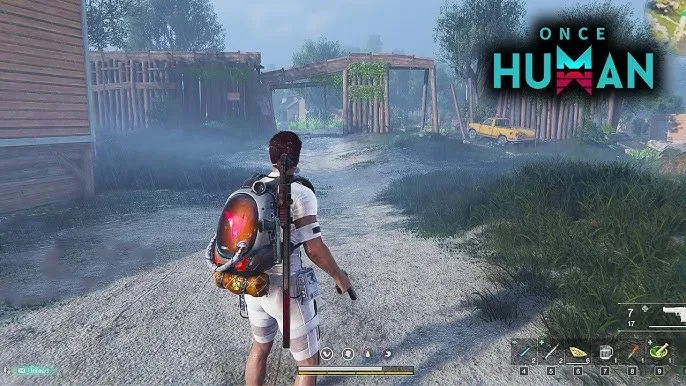
Explore → Gather → Craft → Build → Fight
None of these stages exists in isolation. Combat generates materials needed for crafting. Crafting produces tools needed for efficient gathering. Building creates a secure base for storing gathered resources and housing captured Aberrants that generate passive income. And exploration constantly opens new regions with higher-tier materials that restart the cycle at a more powerful level.
Exploration drives everything. The map is divided into named biomes grasslands, irradiated military zones, toxic swamps, crystalline wastelands each with its own resource profile, enemy density, and environmental hazards. Exploration rewards include rare blueprints, Elemental Crystals needed for tech tree unlocks, and lore fragments that deepen the narrative.
Combat is real-time and third-person, built around firearms and Deviation abilities. Enemies have clear behavioral patterns, weak points, and escalating aggression at higher tiers. The combat feels responsive and punishing in equal measure missing your shots costs ammunition you can rarely afford to waste in the early game.
Multiplayer adds a cooperative layer that the game’s systems actively encourage. Dungeons called Spire Vaults scale for two to four players. World bosses require coordinated group tactics. Alliance systems allow larger communities to share resources, coordinate base defense, and compete for territory control in PvP-designated zones.
Once Human survival mechanics everything you need to know
Survival in Once Human is managed through four primary status bars, and ignoring any one of them will eventually cost you a run.
HP (Hit Points)
HP (Hit Points) is your life total. It depletes when you take damage from enemies, environmental hazards, or falls. It regenerates slowly over time or rapidly through consumables like bandages and cooked food.
Hunger system
Hunger depletes continuously during activity. When it hits zero, your maximum HP begins to shrink over time. Cooking raw ingredients at a campfire or kitchen bench yields food with significantly better nutrition values than consuming raw materials directly always cook when you have the option.
Sanity system
Sanity is the system most new players underestimate. Sanity drains in high-Stardust-density environments, during prolonged combat with Aberrants, and after witnessing certain narrative events. Low Sanity triggers stacking debuffs: first reduced crafting speed, then reduced combat accuracy, then hallucinations that distort your HUD. A Comfort Bonfire placed inside your base passively restores Sanity during rest periods. Always carry Sanity-restoring food on dungeon runs.
Stamina management
Stamina governs sprinting, dodging, and melee attacks. It regenerates when you stop consuming it. Stamina management in combat knowing when to dodge and when to hold ground separates efficient fighters from players who burn through consumables unnecessarily.
Environmental hazards
Environmental Hazards add another layer of complexity. Radiation zones require protective suits or regular consumption of anti-rad medicine. Toxic biomes demand antidote supplies. Extreme cold regions require insulated armor. Never push into a new biome without checking what environmental debuffs it applies and crafting the appropriate counter-gear first.
The aberrants system: Once Human’s most unique feature
Aberrants are the single mechanic that most distinguishes Once Human from every other survival game on the market.
For a full tier list and capture strategies, see our Once Human aberrants guide.
They are not just enemies. They are tools.
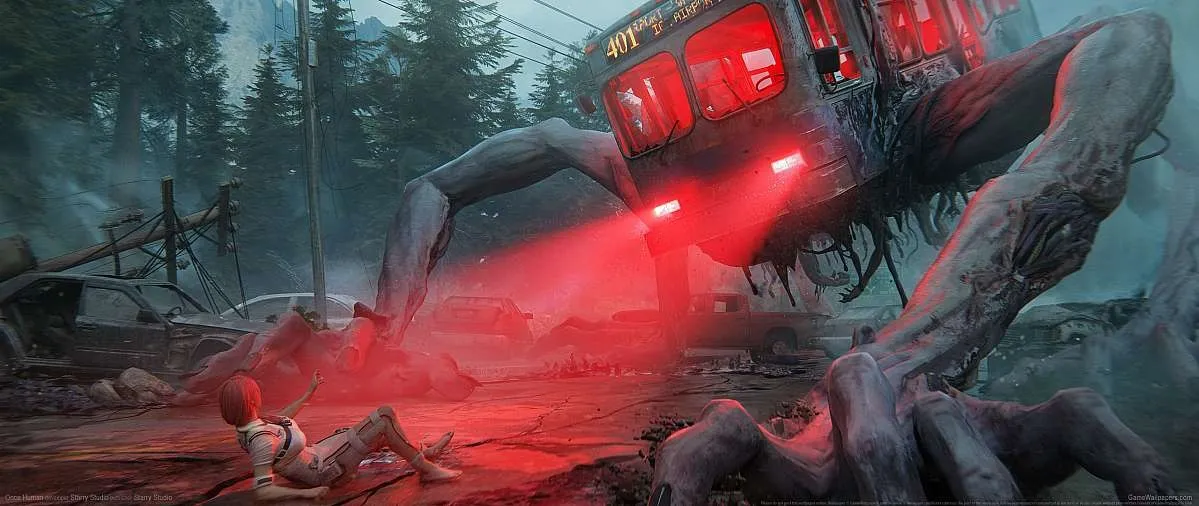
What are aberrants?
Aberrants are Stardust-mutated creatures that exist on a spectrum of threat and utility. Small Aberrants might be little more than a mutated rabbit with crystalline armor. Large Aberrants are multi-phase boss encounters requiring coordinated team tactics. What connects them is the Stardust infection and your Meta-Human ability to exploit that connection.
The capture mechanic
Using a Memetic Cage a crafted item requiring rare materials found in mid-tier zones you can capture a sufficiently weakened Aberrant and transport it back to your base. Once housed in a Deviation House structure, the captured creature enters your service.
Each Aberrant carries a passive ability that activates while it is stationed at your base. These abilities fall into three categories:
- Resource generation: The Aberrant passively produces materials over time metal scraps, wood, food ingredients reducing your daily gathering grind significantly.
- Combat support: The Aberrant can be deployed during base defense events or activated in the field as a temporary combat summon.
- Stat bonuses: The Aberrant provides a persistent passive buff to your character increased HP, reduced stamina consumption, faster crafting speed.
Best aberrants for beginners
New players should target resource-generating Aberrants as a first priority. A single well-chosen Deviation working passively at your base can produce dozens of basic materials per session materials that would otherwise require thirty or more minutes of active gathering. Once your resource income is stabilized through Aberrant labor, shift your capture focus toward combat-support types before entering mid-game dungeons.
Once Human base building system
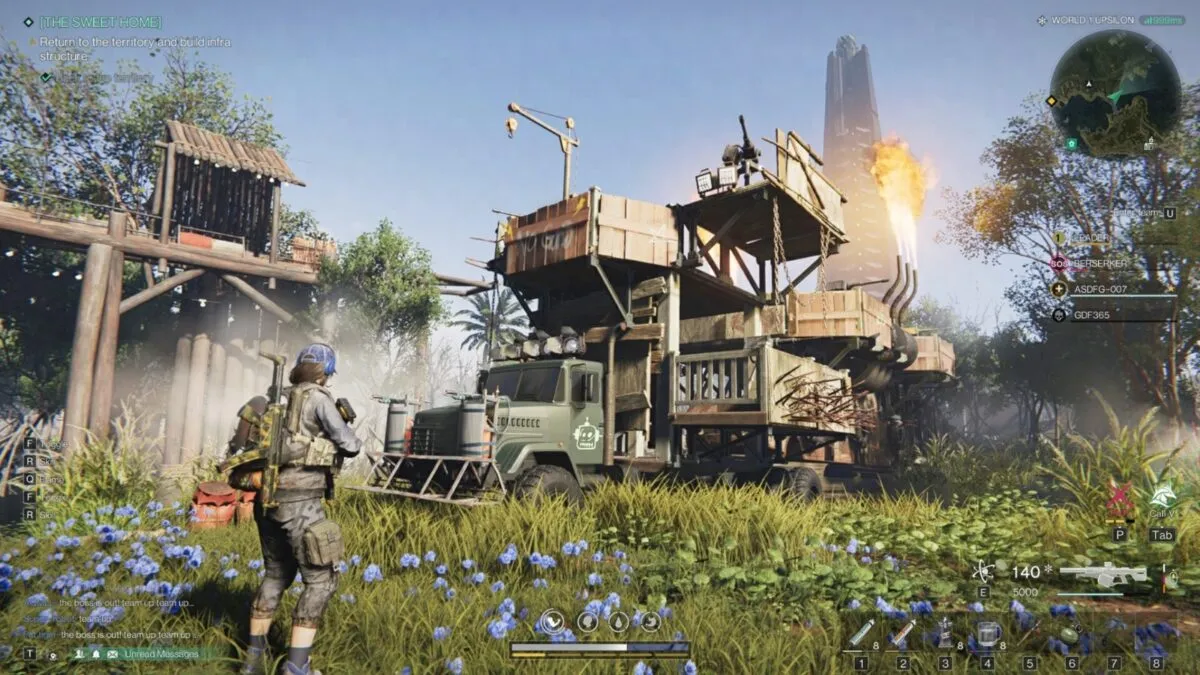
Your base is your lifeline. It is your respawn point, your crafting hub, your storage facility, and your primary defense against the world.
If you want a deeper breakdown, check our detailed Once Human base building guide for advanced layouts and defense strategies.
Choosing your territory
The Territory System gives each player a defined plot of buildable land. Location selection matters more than most beginners realize. The ideal base location has three characteristics: proximity to a freshwater source, access to at least one metal ore node within a short run, and terrain that provides natural cover on at least one side.
Avoid building on main roads between settlements heavy player traffic in PvP-enabled servers makes roadside bases easy targets. Elevated positions offer visibility and natural chokepoints that make base defense dramatically easier.
What to build first
In your first session, prioritize these structures in order:
- Main Console the power core of your base. Without it, nothing functions.
- Stash Box your primary storage. Build it immediately to protect gathered materials from death-drop loss.
- Workbench your crafting center for tools, weapons, and consumables.
- Basic wall perimeter even a single layer of wooden walls reduces raid damage significantly.
- Breach Barricade placed at your entrance, it slows Aberrant movement during invasion events and forces attackers into a narrower approach angle.
Defending your base
Contamination Events are server-wide Aberrant invasion waves that strike all player bases simultaneously on a timed cycle. During these events, automated defenses do the heavy lifting. Invest in turrets, electrified fence panels, and spike traps as soon as your resource income allows. Stock repair kits before every event — wall degradation is permanent until repaired, and destroyed walls lose their HP bonus on the next server reset.
Weapons and combat in once human
The weapons system in Once Human is broader than it first appears.
You can also read our complete Once Human weapons guide to discover the best builds and upgrades.
At the surface level, it looks like a standard shooter arsenal. Underneath, it is a deeply optimizable system of calibrations, elemental bonuses, and passive slots that rewards players who commit fully to a single weapon path.
Weapon categories
- Assault Rifles are the most versatile weapons in the game and the correct choice for most new players. They perform adequately at every range, consume commonly available ammunition, and scale well with early-game upgrade materials.
- Shotguns excel in close-quarters scenarios and base defense situations where enemies funnel through chokepoints. Devastating at short range, nearly useless beyond twenty meters.
- Sniper Rifles reward precision and patience. Their primary value is targeting Aberrant weak points crystalline cores exposed during specific attack animations for bonus damage multipliers that can dramatically shorten boss fights.
- SMGs shine against fast-moving swarm enemies. High fire rate compensates for lower per-shot damage when enemies close distance quickly.
- Melee Weapons are niche but valuable for stealth kills on isolated enemies without alerting nearby groups, and for stamina-conservative players who prefer close-range engagement.
Upgrading correctly
Weapon upgrades require Calibration Kits and Element Cores sourced from dungeons and world events. The most common and costly mistake new players make is spreading upgrade resources across three or four weapons simultaneously. A fully calibrated weapon at tier four outperforms two partially upgraded weapons in virtually every combat scenario. Choose one primary weapon during your first week of play and commit all upgrade resources to it.
Once Human map and world exploration guide
The Once Human map is large, visually diverse, and deliberately unforgiving to players who rush progression.
If you want optimized farming routes and detailed locations, check our Once Human map guide.
Understanding which regions to approach, in what order, and with what preparation prevents the frustrating cycle of dying repeatedly in zones where enemies simply outscale your current gear.
Region progression order
- Chalk Peak the starting region. Moderate enemy density, abundant wood and basic ores, no environmental debuffs. Spend your first two to three sessions here building your base and completing the tutorial missions.
- Swamp of Sorrow introduces toxic environmental debuffs. Requires antidote stockpiling before entry. Contains mid-tier materials and the first real Aberrant boss encounters worth farming.
- Blackfell a high-radiation former military zone. Yields the best weapon blueprints in the early-to-mid game but is guarded by elite Aberrant patrols and features active PvP zones. Do not enter alone or undergeared.
Resource farming
Mining nodes and gathering points respawn on a fixed cycle visible on your map after scanning with a Survey Device a craftable item available in the mid-tier tech tree. Establish a consistent patrol route between high-yield nodes rather than wandering reactively. In populated servers, contested nodes disappear quickly; knowing their respawn timing gives you a systematic advantage over players relying on random exploration.
Once Human tips for beginners 7 rules to survive your first week
1. Build a base in your first session, not your second. Sleeping outside after a server reset without a respawn anchor means losing dropped materials and waking up with minimal resources. Even a four-wall wooden structure with a stash box is enough to protect your early progress.
2. Prioritize the Memetics tech tree over combat upgrades. Unlocking crafting benches, storage expanders, and survival tools yields far more value in the early game than raw weapon damage bonuses. The crafting system is the foundation of everything else.
3. Capture your first Aberrant before day three. A single resource-generating Deviation working passively at your base eliminates the most tedious part of the early-game grind. The time invested in capturing it pays off every single day thereafter.
4. Never explore high-risk zones alone. Once Human’s dungeon and world boss content is balanced for groups of two to four. A solo attempt at a Spire Vault in Blackfell at early gear score is not a challenge it is a waste of consumables.
5. Manage your Sanity bar actively during long sessions. Sanity debuffs stack silently and can cripple your combat performance precisely when you need it most. Keep Sanity food in your inventory on every dungeon run. Check the bar before pulling a boss.
6. Commit all weapon upgrades to a single gun. Spreading Calibration Kits across multiple weapons is the most reliably self-destructive thing a new player can do. One mastered weapon beats a collection of half-upgraded ones in every scenario.
7. Log in for server events. Contamination Events and Supply Drops offer rewards that are disproportionately high relative to the effort required — provided you arrive prepared. Missing event windows consistently is the fastest way to fall behind the server progression curve.
Once Human PC system requirements
Minimum requirements
| Component | Minimum Spec |
|---|---|
| CPU | Intel Core i5-6600K / AMD Ryzen 5 1600 |
| RAM | 12 GB |
| GPU | NVIDIA GTX 1060 6GB / AMD RX 5500 XT |
| Storage | 40 GB SSD |
| OS | Windows 10 64-bit |
| DirectX | Version 11 |
Recommended requirements
| Component | Recommended Spec |
|---|---|
| CPU | Intel Core i7-8700K / AMD Ryzen 5 3600X |
| RAM | 16 GB |
| GPU | NVIDIA RTX 2070 / AMD RX 5700 XT |
| Storage | 60 GB SSD |
| OS | Windows 10 / 11 64-bit |
| DirectX | Version 12 |
Once Human is online-only. A stable broadband connection of at least 10 Mbps is required. The game is playable at minimum settings on mid-range hardware but loads significantly faster and smoother when installed on an SSD rather than a traditional hard drive.
Is Once Human worth playing in 2026?
Pros:
- Massive open world with visually distinct biomes
- Unique Aberrant capture and deployment mechanic
- Deep, layered crafting and tech tree systems
- Regular seasonal updates with fresh content
- Strong cooperative and alliance mechanics
- Free-to-play with fair progression no pay-to-win advantage in core gameplay
Cons:
- Slow early-game pacing that tests new player patience
- Always-online requirement with no offline mode
- Seasonal resets frustrate players who prefer permanent progression
- PvP zones can feel unbalanced for solo players in populated servers
- Sanity system is punishing and poorly explained in the base tutorial
Yes Once Human is worth playing in 2024, particularly for survival game veterans who have exhausted the genre’s standard offerings. Its Aberrant system alone introduces a layer of strategic depth that most competitors lack entirely. New players who push past the first five hours of relatively slow content will find a game that consistently rewards curiosity, preparation, and cooperation.
By following this Once Human complete beginner guide, you will avoid common mistakes and improve your gameplay significantly.
thoughts on this Once Human complete beginner guide
Once Human is not a game you master quickly. It is a game you learn system by system, session by session until the world that initially felt hostile begins to feel like home territory.
The survival mechanics, Aberrant capture system, base building tools, and weapons progression all interlock in ways that reward players who engage with them deliberately rather than reactively. Use this Once Human beginner guide as a reference, not a one-time read. The sections on Aberrants, base defense, and weapon calibration in particular will make more sense after your first ten hours of play than they do now.
The world of Once Human is dangerous by design. It is also, for players willing to learn its rules, one of the most compelling survival experiences available today.
This Once Human complete beginner guide should be your go-to reference as you continue improving in the game.